Watch-based capture
Use motion sensors already available on Apple Watch during a CourtSense tennis session, without adding a racket-mounted device.
 CourtSense
●Tennis swing tracker · beta
CourtSense is developing Apple Watch motion analysis as part of a broader tennis record—not as a replacement for a coach, camera system, or line-calling technology.
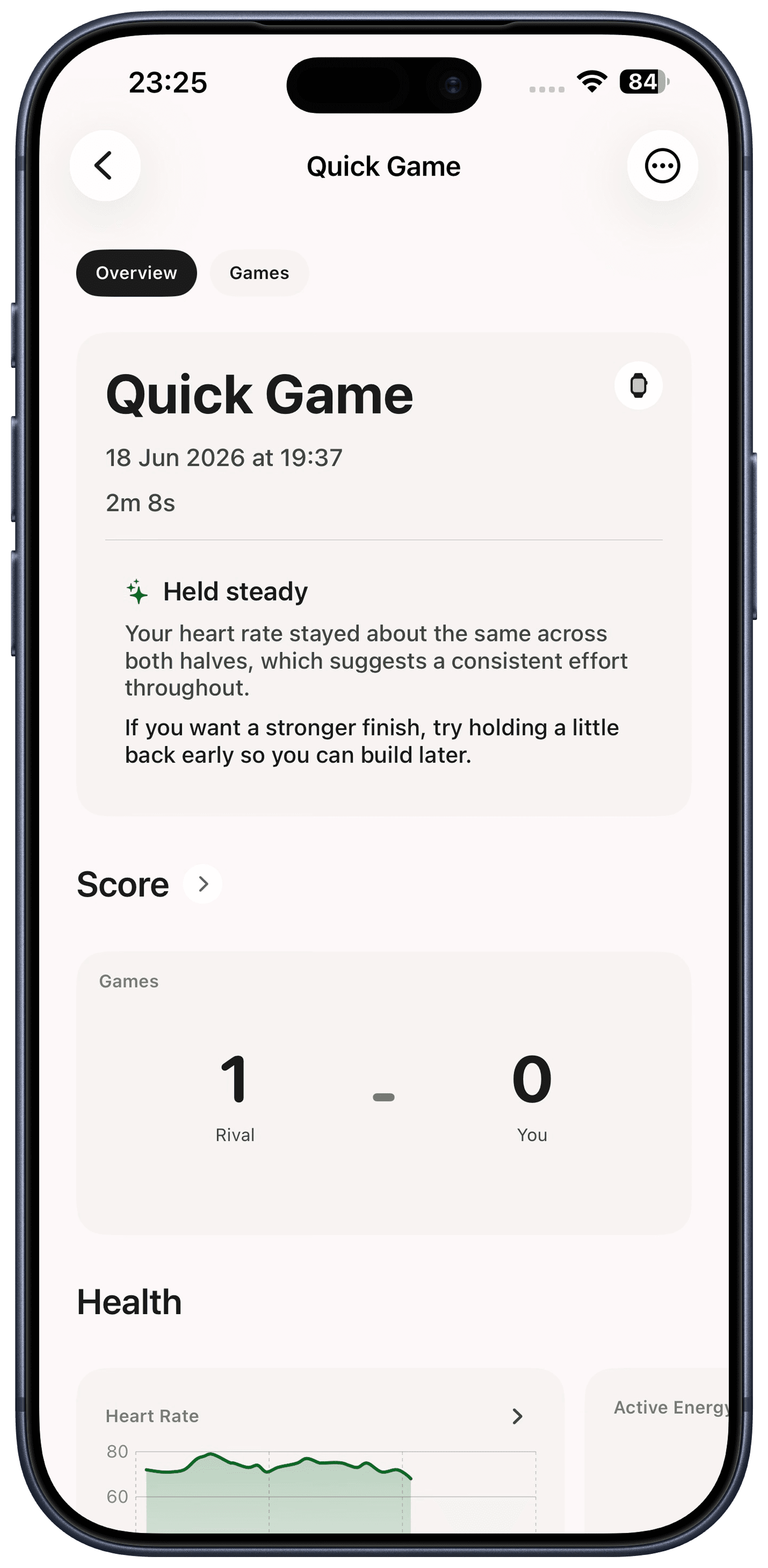
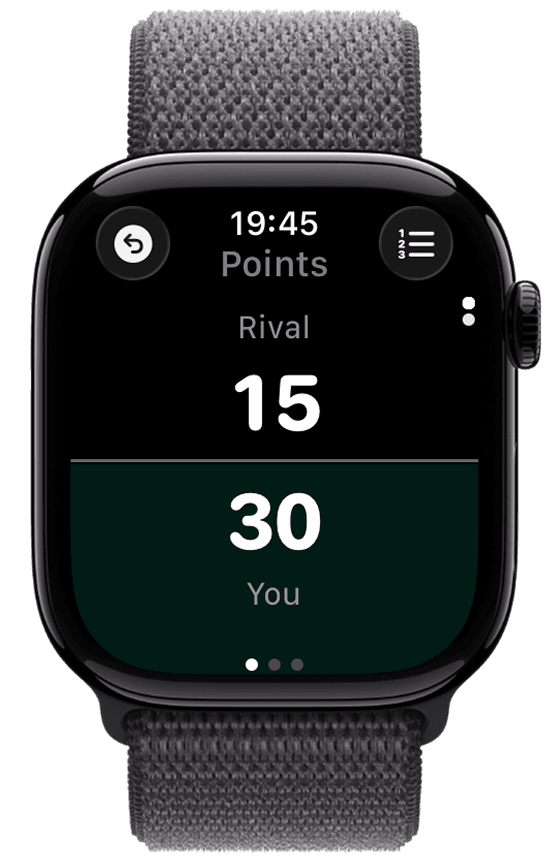
Motion with context
The beta approach connects motion signals to the tennis session, workout, and recap while keeping uncertainty visible.
Use motion sensors already available on Apple Watch during a CourtSense tennis session, without adding a racket-mounted device.
Keep experimental motion information beside scoring, duration, heart rate, active energy, and the type of tennis you played.
Treat motion results as developing signals. CourtSense does not promise professional biomechanics, ball speed, placement, or line calls.
What the beta is for
Wearable motion analysis can support reflection, but it needs validation, context, and careful product language.

The watch can collect motion signals while CourtSense keeps the surrounding workout and session record.
CourtSense is designed to surface concise observations rather than bury players under raw sensor charts.
The beta is not a medical assessment, a substitute for qualified coaching, or an electronic line-calling system.
Questions, answered
Apple Watch provides motion sensors that can support experimental swing and shot analysis. CourtSense uses those signals in a beta feature whose results can be incomplete or incorrect.
No. CourtSense does not claim camera-based ball tracking, ball speed measurement, placement analysis, or electronic line calling.
No. The beta can provide an additional session reference, but it is not a substitute for observation and feedback from a qualified coach.
Depending on permissions and the session, CourtSense can keep scoring, duration, heart rate, active energy and other workout context beside the experimental motion record.
Your next session starts here
Download CourtSense for iPhone and Apple Watch.